
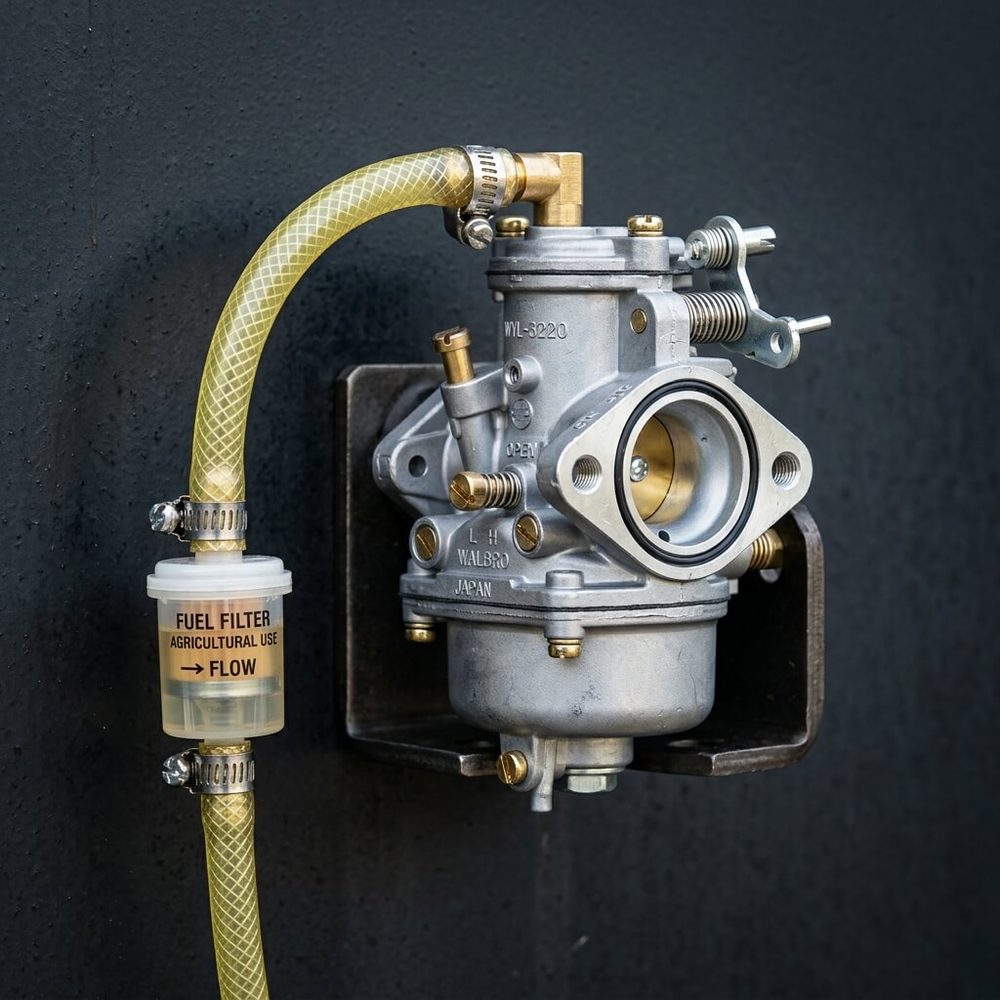
The introduction of E20 petrol (a blend of 20% ethanol and 80% petrol) across fuel stations represents a significant step forward for the environment. However, for small agricultural engines—specifically power weeders and brush cutters—it introduces a critical maintenance challenge: carburetor corrosion and clogging.
The Chemistry of the Problem
Ethanol is hygroscopic, meaning it actively attracts and absorbs moisture from the air. When E20 fuel is left sitting in a carburetor bowl for an extended period, the ethanol-water mixture begins to separate from the petrol in a process known as phase separation.
This separated, highly corrosive mixture attacks the soft metals and rubber seals inside your carburetor. Furthermore, as the petrol evaporates, it leaves behind a sticky varnish that completely clogs the microscopic jets required for your engine to start.
"Leaving E20 fuel in your power weeder's carburetor for more than 15 days of inactivity is the #1 cause of starting failures and expensive replacements."
The Solution: The 60-Second Fuel Drain Protocol
Fortunately, protecting your KOREVA9 machinery from E20 fuel damage is entirely preventable and takes less than a minute. You must build this habit into your post-work routine.
Step-by-Step Carburetor Drain
- Turn off the fuel valve: Locate the fuel shut-off valve beneath the petrol tank and turn it to the 'OFF' position.
- Start the engine: With the valve off, pull the recoil starter and start the machine.
- Let it run dry: Allow the engine to idle. It will run for about 1 to 2 minutes on the fuel remaining in the fuel line and carburetor bowl.
- Wait for it to stall: The engine will begin to surge and eventually stall out completely.
- Attempt one more start: Pull the cord one more time with the choke on to ensure every last drop of fuel is burned out.
Long-Term Storage (Winterization)
If you are storing your power weeder for the off-season (anything longer than 30 days), draining the carburetor is not enough. You must also completely drain the main fuel tank. E20 fuel sitting in a plastic or metal tank will degrade rapidly, losing its combustibility and potentially rusting metal tanks from the inside out due to moisture accumulation.
KOREVA9 Warranty Notice: Please note that carburetor damage explicitly caused by stale E20 fuel or phase separation is considered user negligence and is not covered under your standard 12-month warranty. Protect your investment by following these simple steps.