
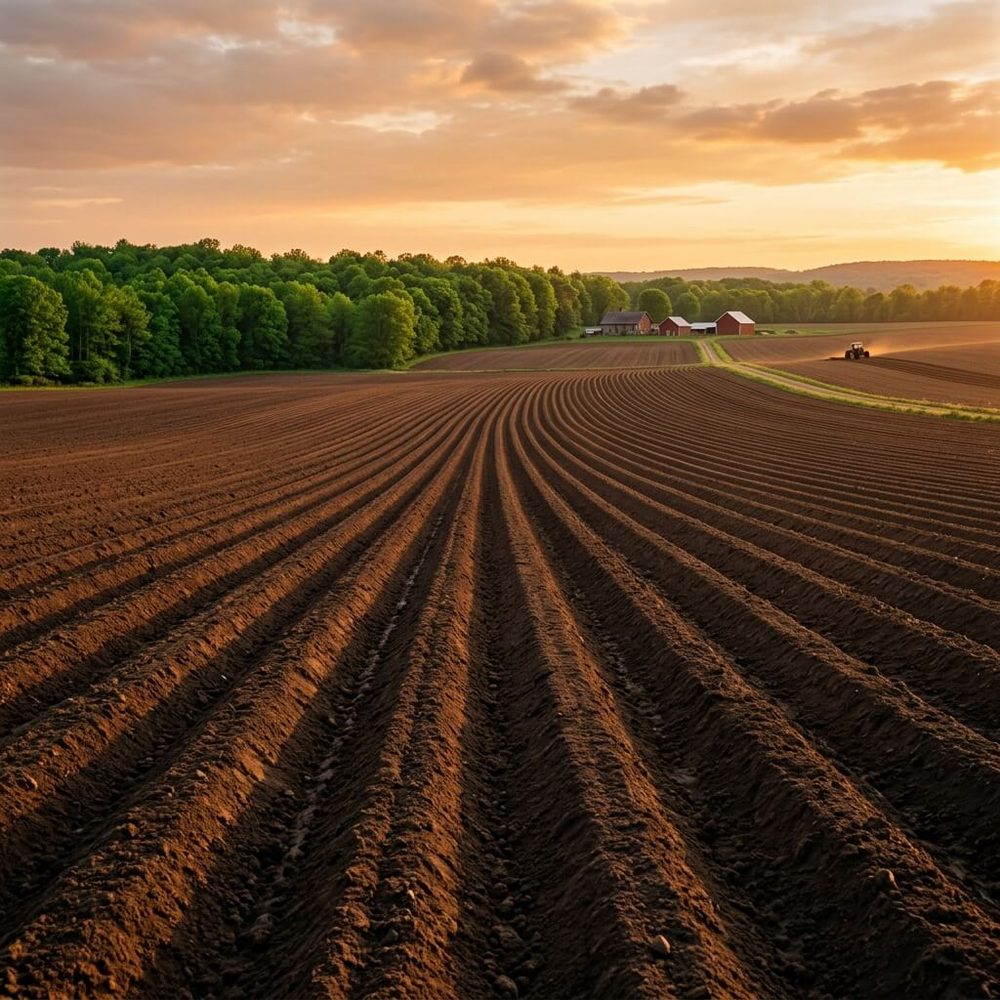
Tillage is the agricultural preparation of soil by mechanical agitation of various types, such as digging, stirring, and overturning. For thousands of years, humans have manipulated the earth to create a hospitable environment for seeds to germinate.
Today, with advanced KOREVA9 machinery, tillage has evolved into an exact science. Understanding the fundamentals of primary and secondary tillage is the first step toward maximizing your crop yields.
The Goals of Tillage
Before putting a blade to the earth, a farmer must understand why they are tilling. The primary objectives are:
- Seedbed Preparation: Creating a fine, crumbly top layer that allows perfect seed-to-soil contact.
- Weed Control: Mechanically uprooting and burying competing weed species before planting.
- Soil Aeration: Breaking up compacted layers to allow oxygen and water to reach deep root zones.
- Residue Incorporation: Mixing leftover plant material from the previous harvest back into the soil to decompose and return nutrients.
Primary vs. Secondary Tillage
Modern conventional farming divides soil preparation into two distinct phases.
Primary Tillage (The Heavy Lifting)
This is the aggressive, deep working of the soil, usually performed right after the last harvest or at the beginning of a new season. The goal is to shatter compacted soil, aerate the earth deeply, and bury heavy crop residue.
Implements Used: Mouldboard plows, chisel plows, and disc plows. These implements dig deep (often 6 to 24 inches) and leave the surface rough and cloddy.
Secondary Tillage (The Finishing Touch)
Following primary tillage, the soil is too rough for planting small seeds. Secondary tillage is shallower (usually only 2 to 6 inches deep) and is designed to pulverize massive clods, level the field, and kill emerging weed seedlings.
Implements Used: Disc harrows, cultivators, and rotary tillers (rotavators). This is where KOREVA9's heavy-duty rotavators excel, capable of turning a rough plowed field into a perfect seedbed in just one or two passes.
"Over-tilling is just as dangerous as under-tilling. Pulverizing soil into a fine dust destroys its aggregate structure, leading to severe wind erosion and a crusting effect after the first rain."
Conservation Tillage: The Modern Approach
While traditional deep plowing has its place, many modern farmers are turning toward Conservation Tillage (or Minimum Tillage). This approach aims to leave at least 30% of crop residue on the soil surface to prevent erosion and retain moisture.
By utilizing specialized KOREVA9 implements, farmers can perform primary and secondary tillage simultaneously in narrow strips, saving fuel, protecting the soil biome, and maintaining healthy, high-yielding fields for generations to come.